

Most owners think a spam filter on the contact form ends the problem. Bots get caught, people get through, and every message in the inbox is a lead. Google doesn't promise that. Its invalid traffic page for advertisers says its filters can't control what visitors do after they click, so bad traffic can still land on your site and fill in your forms. Our own form records show how much of it does.
From October 14 to November 20, 2026, 34 small business websites we build and host took 1,993 form fills. Netlify, the host, filed 1,637 of them as spam. We then read every fill by hand and by word rules. About 272 came from real people. That is 1 in 7. The filter caught 96 percent of the junk, let 62 junk messages into the inbox, and filed 4 real requests as spam.
- The busiest junk was Russian language text with links, 632 fills. One blog post drew 291 of them.
- 342 fills were sales pitches. 47 of those posed as a customer to test how fast you call back, then sold an answering tool.
- 123 fills asked "what's your price" in other languages, from Welsh to Zulu, and said nothing about a job.
- A review form on one of our directories took 94 fills. Not one came from a real person.
- The real requests in the spam folder included a car buyer with a VIN and two roofing companies fixing their listings.
- If your site counts a lead when someone presses Send, it counts most of this junk as a lead too.
What We Counted
I work the sales side, so I live in these inboxes. Every morning a script of ours pulls each form submission from every site we host on Netlify. It keeps both piles, the inbox and the spam folder.
For this report I took the 38 full days from October 14 to November 20, 2026. By the end of that window the script was watching 152 sites. 34 of them got at least one form fill. They are mechanics, locksmiths, a garage door company, roofers, an inspection service, two directories, our own agency site and a few others.
Netlify sorts every fill with Akismet. Fills that pass go to Verified submissions. The rest go to a Spam list the owner has to open on purpose. We didn't stop at the filter's call. We sorted all 1,993 fills again, first with word rules, then by reading the edges ourselves. 26 fills in the inbox were our own test messages, so we left those out of the real count.
We never name a customer, a sender or the business a message went to, and we don't quote any message.
What the Spam Folder Held
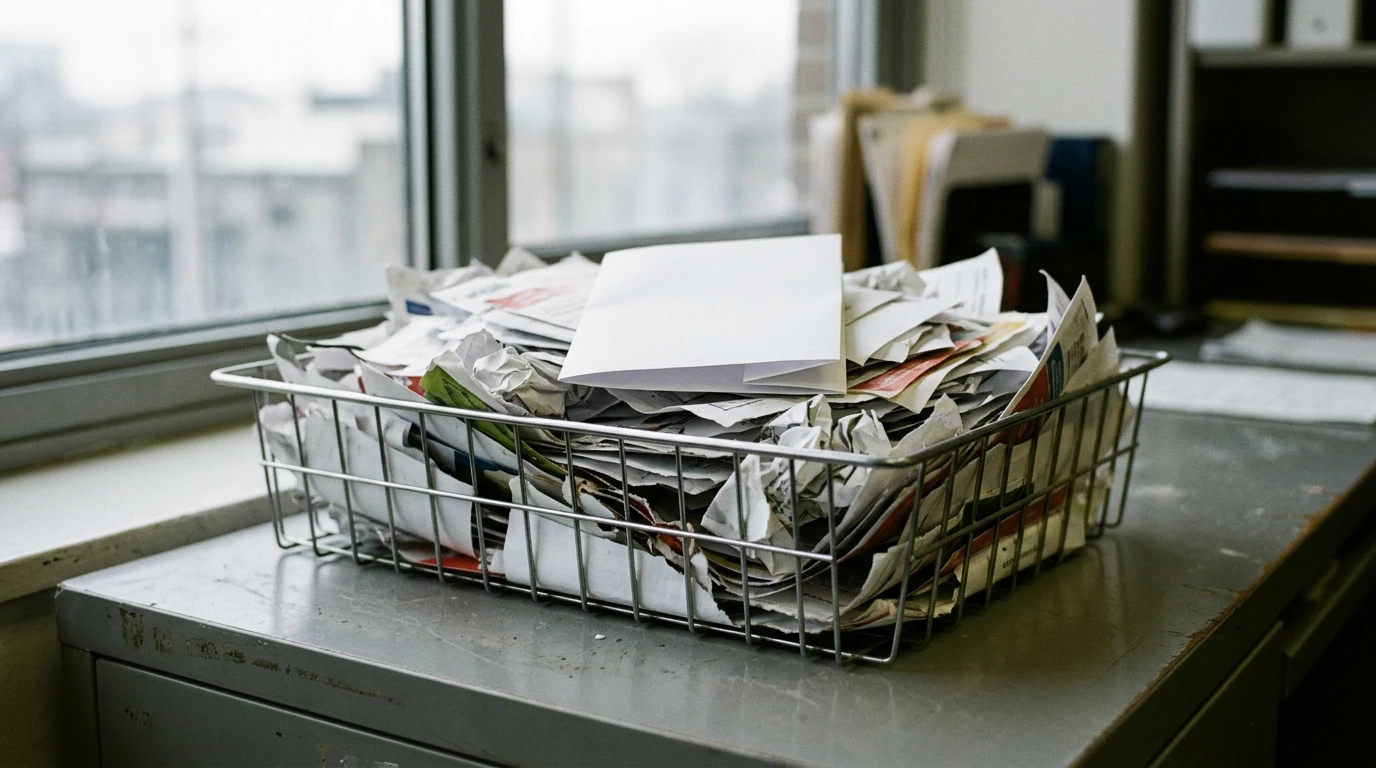
Spam isn't one thing. OWASP, the web security group, lists it as its own automated threat, OAT-017, adding junk content or messages to a site. We sorted the 1,637 fills Netlify flagged into seven piles by what they carried.
What the 1,637 Spam Fills Were
Source, our own form records from 34 sites we host, October 14 to November 20, 2026, sorted by word rules and checked by hand.
The Russian text was the biggest pile by far. Most of it read like a short article with a link to a site selling something. 291 of those fills came in through the form on one blog post about corporate spying. The bots found that page and kept hitting it.
The sales pitches were the pile that hurts most, because they look like mail. SEO and search offers led the way, in about 200 of them. Review removal, virtual assistants, AI agents and "I built you a new website" followed.
One pitch is worth knowing by sight. 47 times, a seller filled in the form, called it a test, said a real customer would already be waiting, and then sold a tool to answer faster. It reads like a complaint. It's an ad.
The price probes are the strangest. A short line asking for your price, in a language your customers don't speak, with no name or job attached. Nobody is shopping. The sender is testing whether your form takes a submission and whether a reply comes back.
The review form on one of our directories never got a single real review in 38 days. It got 94 fills of links, Russian text, gambling and random letters. If your site lets anyone post a review without a check, assume most of what lands there is junk.
What Got Through, and What Got Buried
A filter makes two kinds of mistakes. It lets junk in, and it throws real people out. We counted both.
| Where Netlify put it | Real person | Junk |
|---|---|---|
| Spam folder | 4 | 1,633 |
| Inbox | 268 | 62 |
The table leaves out our 26 test fills. Of 1,695 junk fills, the filter caught 1,633. That's 96 percent, a good score.
The 62 that slipped into the inbox were mostly pitches written in ordinary English. Link builders, a bag shop, a posture brace, a "read the news and earn" scheme, and Russian adult text dressed up as a truck inspection request. They looked enough like a person to pass.
The four real people in the spam folder matter more. One was a car buyer in Indiana asking for an inspection, with the VIN and where the car sat. Two were roofing companies asking a directory to add or fix their listing, with their phone, address and website. One was a locksmith claim that also landed in the inbox as a second copy.
Three of those four had no copy in the inbox. That sounds small. It's one real request about every 13 days that nobody would see unless someone opened the spam folder.
Why Fake Fills Bend Your Numbers
This beat covers fake clicks and fake visits that spend a budget or bend the data you steer by. Form spam does the second, quietly.
Think about where your lead count comes from. Many sites count a lead when someone presses Send or reaches the thank you page. The spam sort happens after that, on the host's side. So the count in your analytics and your ad account includes the bots. On our 34 sites that would have meant about 7 counted leads for every real one.
The usual safety nets don't cover this. Google Analytics removes visits from known bots on its own, and you can't switch that off or see how much it removed. It doesn't read what someone typed in your form. Google Ads removes some invalid clicks and conversions it finds, and its own page tells advertisers to guard their forms with tools like reCAPTCHA, server side checks and double opt in.
If an ad account learns from those inflated counts, it can chase more of the traffic that fills forms with junk. You pay for that twice. Once for the click, and again in the time someone spends sorting the inbox.
None of this needs a competitor behind it. Most of what we saw was spray and pray. Still, the same weakness that lets a stranger flood your form lets a rival do it on purpose, and the damage to your numbers looks the same.
How to Clean Up Your Form
- Open the spam folder every week. Ours buried a real request about every 13 days. Move real ones to the inbox and answer them.
- Count leads after the sort, not at the click. If you can, fire your lead conversion from the inbox side, or tag a real lead by hand before it counts.
- Add a hidden honeypot field. Netlify's docs say a fill with that hidden field filled in gets quietly rejected, because only a bot would see it.
- Add a quiet bot score. Google's reCAPTCHA v3 scores each request from 0.0 to 1.0 without stopping the visitor, and suggests 0.5 as a starting line.
- Ask for one fact only a customer has. A phone number, a ZIP code, the year of the car. In our set, junk often came with a country or a car year that made no sense for the job.
- Lock down any public review or comment form. Ours took 94 fills and no real reviews. Hold posts for approval or require a real contact.
- Never answer a price probe or a test pitch. A reply tells the sender your form is live and read by a person.
Our own morning lead check now pulls the spam folder along with the inbox, so the buried ones get read. If you have records showing a rival flooding your forms or clicking your ads, send the desk a tip, or follow the bot and click fraud beat. For bots that read pages instead of filling forms, see our report on a bot swarm that read 2,132 directory pages.
What We Got Wrong
Our count is low. Netlify says fills caught by a honeypot field or a failed reCAPTCHA never reach the Spam list at all, and some of our forms use a honeypot. Those never showed up in our records.
Our real or junk call is ours, made by word rules and by reading. A few were close. Blank fills that picked a service and left a phone, we counted as real. Our script also drops names, phones and emails before we read anything, so some calls rest on the message alone.
And these are our sites. Most are small trade businesses and two are directories. A store or a law firm will see a different mix. One form vendor's 2026 guide reports about 21 percent spam across its own customers' forms, which shows how wide the range runs.
Common Worries
Why am I getting so much spam through my contact form?
Bots crawl the web for forms and fill in every one they find. In our records, 34 small business sites took about 52 fills a day, and roughly 6 of every 7 were junk.
Can real customers end up in the spam folder?
Yes. In 38 days, 4 of 272 real fills on our sites were filed as spam, including a car buyer with a VIN. Three of them had no copy in the inbox. Check the folder every week.
Do spam form fills count as conversions in Google Ads or Analytics?
They can. If the conversion fires when someone presses Send, the bot fill counts before the host sorts it. Count leads after the sort when you can.
Is a CAPTCHA enough to stop form spam?
It helps, but no single tool caught everything for us. Pair a quiet bot score with a hidden honeypot field, one required fact only a customer knows, and a weekly look at the spam folder.
Should I reply to messages asking for my price in another language?
No. In our set they came with no name and no job. A reply only confirms that a person reads the form.
Records Behind This Report
The counts are ours. They come from our daily pull of Netlify form submissions, inbox and spam, for 34 small business sites we build and host, October 14 to November 20, 2026, 1,993 fills in all. The sorting into real and junk is our own.
Go to the Source
- Google Ads Help, About invalid traffic, accessed November 2026.
- Netlify Docs, Spam filters, accessed November 2026.
- Analytics Help, Known bot-traffic exclusion, accessed November 2026.
- Google for Developers, reCAPTCHA v3, accessed November 2026.
- OWASP, OAT-017 Spamming, accessed November 2026.
- splitforms, Contact Form Spam Protection, The Complete 2026 Guide, accessed November 2026.